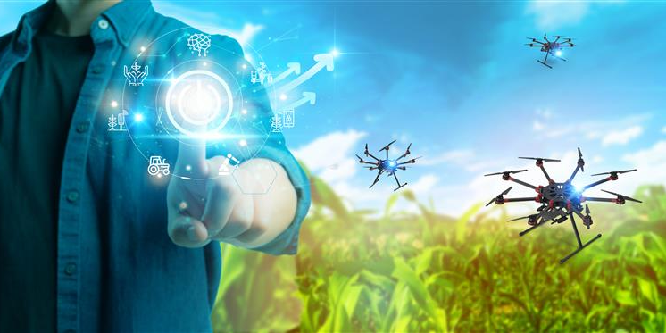
Unmanned Aerial Vehicles (UAVs), commonly known as drones, have made significant strides in recent years, particularly with advancements in sensor and computing technologies. As a result, UAVs can now perform complex tasks autonomously, such as visual tracking and environmental monitoring. However, the challenge remains about how to meet the increasing computational demands with the limited battery capacity of UAV. This is where edge computing comes into play.
The Power of Edge Computing
Edge computing processes data closer to its source, minimizing latency and boosting computational power without the extensive energy consumption associated with centralized cloud computing. Unlike traditional cloud computing, which relies on remote data centers, edge computing enhances efficiency by processing data locally, ensuring faster responses and reducing delays.
UAV-Based Intelligent Edge Computing (UEC)
UAVs equipped with advanced sensors like cameras and LiDAR generate massive amounts of data, but their limited computing power and energy resources can hinder large-scale data analysis. Edge computing solves this by offloading complex computations to nearby edge servers, enabling real-time data analysis, path planning, and machine learning model inference without overwhelming the UAV's resources.
Strengths and Limitations
-
Cloud Computing: Latency and Remote Processing
While cloud computing provides substantial processing power and scalability, it struggles with real-time data processing due to delays in transferring data to centralized servers. This becomes problematic in remote areas or emergencies, where stable network connections may be unreliable.
-
Edge Computing: Bandwidth and Infrastructure Needs
Edge computing mitigates these issues by processing data locally, reducing latency and optimizing response times. This makes it ideal for real-time analysis in IoT environments. However, edge computing still requires a stable infrastructure and may rely on cloud resources for more complex computations.
Edge-Powered UAVs: The Best of Both Worlds
Combining UAVs with edge computing creates a powerful synergy, enabling real-time data processing, mobility, and large-scale data handling, especially in remote and dynamic environments. This integration is particularly beneficial in:
- Disaster Management and Recovery: UAVs can assess damage and coordinate relief efforts in real-time, prioritizing rescue operations.
- Smart Urban Development: Drones can monitor construction projects, providing real-time updates on progress, safety compliance, and environmental impacts.
- Bridge Maintenance: UAVs can conduct detailed inspections, allowing engineers to quickly prioritize maintenance tasks.
- High-Rise Construction: UAVs enable inspections of hard-to-reach structures, providing real-time data on construction progress and improving safety.
- 3D Mapping and Reconstruction: Drones create detailed maps for environmental monitoring or disaster response, offloading data processing to edge servers to conserve battery power.
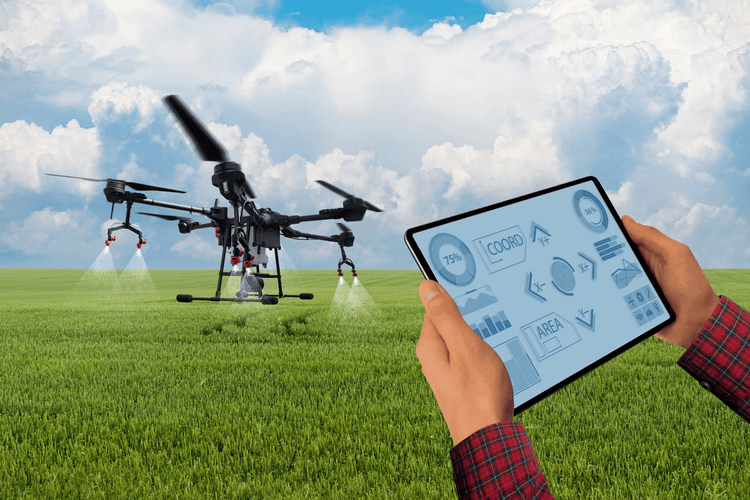
Unlocking IoT Potential with Cyient’s Edge Capabilities
As IoT continues to revolutionize industries, Cyient leads the way with robust IoT and edge computing solutions, offering onboard sensor modules and edge gateways that are pushing the boundaries of IoT applications.
Cyient’s Onboard Sensor Module
Cyient’s sensor modules perform in a variety of environments, offering precise measurements. These modules are critical for UAVs performing tasks such as land surveying, environmental monitoring, and infrastructure inspection. The key components include:
- Payload: This refers to the equipment carried by the UAV to perform its tasks, such as high-resolution cameras, LiDAR sensors, multispectral cameras, and GPS/GNSS.
- Flight Controller: The flight controller is the brain of the UAV, processing data from sensors to help the drone navigate, control its altitude, and maintain flight stability.
- Additional Sensors: Temperature sensors and accelerometers monitor the UAV's thermal conditions and vibrations.
Cyient IoT Edge Gateway 5400: A Smart Hub
The Cyient IoT Gateway 5400 has a camera connected to the Azure Cloud. It includes features such as a USB 2.0 communication interface, ample local storage, 2 GB RAM, and a robust communication stack (Ethernet, Wi-Fi, 5G, LTE, LORA) for secure cloud connectivity. Running on a Linux OS, it supports advanced processing and edge analytics. Additionally, its Azure Certification ensures seamless compatibility, making it an optimal low-cost enterprise gateway.
Cyient’s IoT solutions are further bolstered by integration with Microsoft Azure, enabling powerful cloud-based analytics, scalability, and enhanced operational intelligence. This ensures businesses can leverage IoT data for actionable insights and improved decision-making.
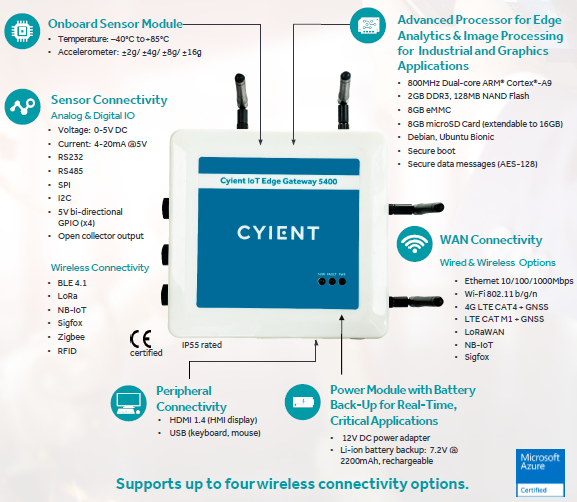
Cyient IoT Gateway 5400 is a robust and reliable solution for diverse IoT applications.
Harnessing the Power of Edge Analytics: Key Benefits
Edge analytics plays a crucial role in improving efficiency and real-time decision-making for IoT applications. By processing data closer to its source, edge analytics addresses several key challenges:
- Reduced Latency: Edge analytics processes data locally, enabling faster, more reliable responses—essential for real-time IoT operations.
- Optimized Bandwidth Usage: By filtering data locally, edge computing reduces network traffic and operational costs.
- Enhanced Connectivity: Local data processing ensures continuous operations, even in remote areas with limited network access.
- Improved Efficiency and Reliability: By distributing processing tasks, edge computing reduces cloud dependency, enhancing overall system efficiency.
- Strengthened Security: Data is processed and filtered locally, minimizing exposure and enhancing security by only transferring necessary data.
Cyient's IoT and edge capabilities empower businesses with scalable, secure, and efficient solutions. Supporting four wireless connectivity options and rugged designs, Cyient’s solutions cater to the demands of industrial applications. From manufacturing to smart cities, logistics to remote monitoring, Cyient drives innovation with precision and reliability.
A Promising Future for UAVs and Edge Computing
The integration of UAVs and edge computing is set to revolutionize industries by enabling faster, more efficient real-time data processing and intelligent decision-making. As technology evolves, we can expect UAVs to become even more autonomous and capable, supporting applications in agriculture, defense, infrastructure, and beyond.
Edge-powered UAVs represent more than just a technological advancement—they are a glimpse into a future where operational efficiency, safety, and scalability are the norm. As UAVs continue to evolve, their integration with edge computing will drive more sustainable, intelligent, and dynamic systems across industries, transforming how we approach complex tasks in our increasingly digital world.