Introduction
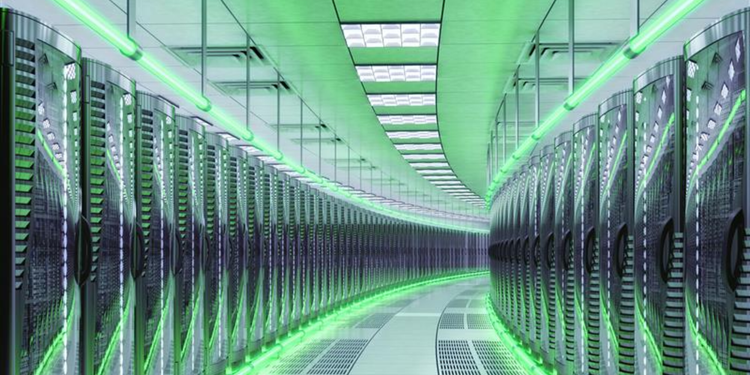
As the demand for high-speed, low-latency Internet continues to grow, fiber optic networks have become the foundational infrastructure for modern digital communication. Central Offices (COs)—the operational hubs responsible for signal routing and housing critical network equipment—are increasingly strained by escalating data traffic, rising energy consumption, and evolving sustainability requirements.
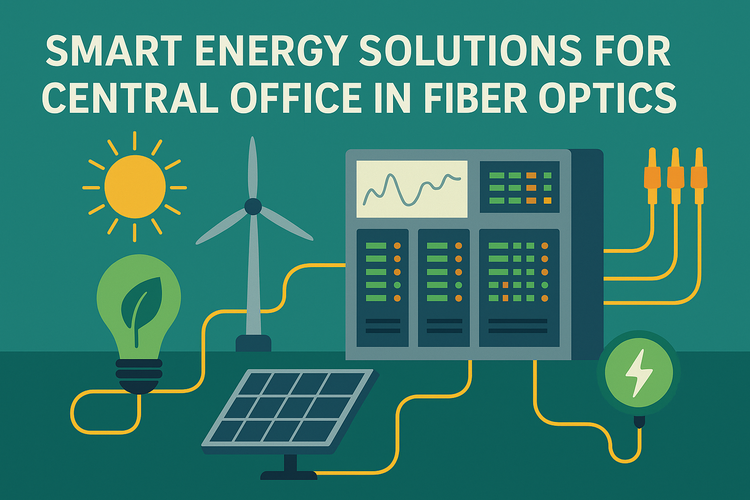
To address these challenges, service providers are implementing integrated smart energy solutions. By leveraging intelligent power management systems, artificial intelligence (AI), renewable energy technologies, and network virtualization, organizations can significantly reduce emissions, enhance operational efficiency, and improve the resilience of their telecom infrastructure.
Smart Power Management Systems
Smart Power Management Systems enable real-time monitoring of energy consumption across racks and individual devices using advanced sensors and smart meters. These systems provide granular insights into voltage, current, temperature, and load, allowing network operators to identify inefficiencies and make informed energy optimization decisions.
Smart Power Distribution Units (PDUs) complement this capability by offering:
- Outlet-level monitoring and control
- Remote configuration and diagnostics
- Intelligent load balancing
- Automated fault detection and alerts
During off-peak periods, AI-integrated systems can dynamically reduce power to underutilized components, such as backup routers, without affecting network performance. This reduces operational costs, lowers thermal output, and extends the lifespan of hardware, ultimately minimizing the need for supplemental cooling.
AI-Driven Energy Optimization
AI and machine learning enhance power efficiency by analyzing historical and real-time network traffic to forecast demand and facilitate dynamic power allocation. This ensures that only essential systems operate at full capacity, improving both energy use and system reliability.
AI also automates key environmental functions, including lighting, cooling, and HVAC adjustments, based on occupancy patterns and ambient conditions. Predictive analytics support preventive maintenance planning and accurate energy budgeting, enabling proactive resource management and reducing the risk of unexpected downtime.
Software-Defined Power (SDP)
Software-Defined Power (SDP) applies virtualization principles to energy infrastructure. Much like Software-Defined Networking (SDN), SDP decouples the control layer from physical power systems, enabling centralized, software-driven power management.
When integrated with SDN and Network Functions Virtualization (NFV), SDP allows:
- Real-time adjustment of power delivery based on demand
- Policy-driven energy control across distributed assets
- Remote monitoring, diagnostics, and automated response to anomalies
This level of orchestration supports energy efficiency and system flexibility and ensures that mission-critical functions receive prioritized power resources. This approach not only slashes energy waste and cuts costs, it keeps essential systems powered reliably.
Renewable & Hybrid Power Integration
In locations where grid access is limited or sustainability is a key objective, renewable and hybrid power solutions offer clean, decentralized energy alternatives. These include solar panels, wind turbines, and microgrids integrated with:
- Battery Energy Storage Systems (BESS)
- Smart inverters for energy conversion and control
- Energy Management Systems (EMS) for intelligent load scheduling
Smart grid integration facilitates seamless switching between renewable sources, grid power, and storage, ensuring continuous and stable energy delivery—even under variable conditions. These systems are especially beneficial for remote installations and disaster recovery operations.
Equipment Virtualization & Consolidation
Replacing legacy hardware with Virtualized Network Functions (VNFs) enables service providers to consolidate multiple networking tasks—including routing, load balancing, and security—onto software-based platforms. This approach significantly reduces the need for dedicated physical devices.
Key advantages include:
- Accelerated deployment and simplified scalability
- Centralized management and orchestration of network services
- Reduced hardware and cooling requirements
Virtualization can reduce infrastructure size by up to 50%, yielding substantial savings in energy and maintenance, while increasing operational agility.
Conclusion
To meet the challenges of growing data demand and increasing energy constraints, telecom operators must modernize their Central Offices through comprehensive energy efficiency strategies. By integrating smart power management, AI-driven optimization, Software-Defined Power, renewable energy systems, and network virtualization, providers can:
- Enhance energy efficiency
- Lower operational costs
- Increase system resilience and uptime
- Align with long-term sustainability goals
These innovations position telecom networks to be more adaptive, environmentally responsible, and capable of supporting the evolving demands of global connectivity.