Introduction
Across the globe, utility poles form the quiet backbone of power and communication networks. With rapid broadband expansion and the rollout of new communication cables such as fiber optic, CATV, and wireless technologies, these poles are under unprecedented pressure. Each new attachment adds weight and complexity, raising the stakes for safety and reliability. Without careful inspections, a single weakened pole can trigger outages, create hazards for workers and the public, and cause costly delays.
That’s why inspections are more critical than ever. Yet many traditional methods have not kept pace with today’s demands. Utilities now face the dual challenge of maintaining aging infrastructure while embracing smarter, technology-driven tools that promise safer, faster, and more reliable ways to manage this essential backbone.
Why Pole Inspection Matters?
As new communication cables such as fiber optic, CATV, or broadband lines are attached to utility poles, they add extra weight and stress to the structure. This is why pole inspections are vital to confirm each pole is strong enough to safely support new attachments. Inspections reveal damage or decay that may not be visible but could cause failures if ignored. An overloaded, weakened pole can snap, leading to power or communication outages and serious safety risks for workers and the public. Regular checks also prevent issues such as having multiple poles side-by-side (a condition known as “double wood”) and ensure all attachments comply with safety standards. By inspecting poles ahead of upgrades, utilities can determine whether a pole can accept new cables, requires reinforcement, or must be replaced, making network expansions safer, faster, and more cost-effective. In essence, inspections safeguard people, prevent outages, and support the smooth growth of broadband and wireless networks.
Traditional Inspection Methods
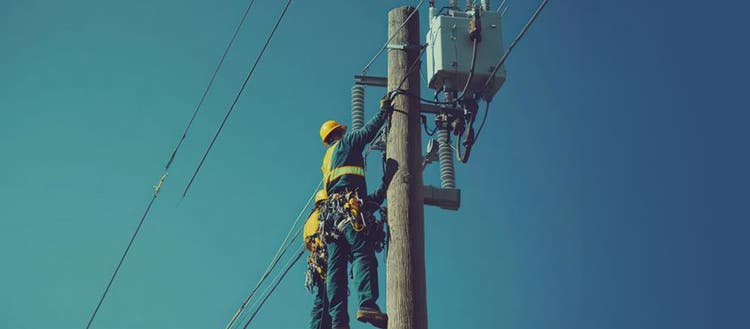
To appreciate the value of innovation, it’s important to understand how inspections have traditionally been carried out. Historically, the pole inspection process has centered on manual audits, visual checks, and mechanical tests that require field crews to gather detailed information at each site.
The traditional pole inspection process has several structured steps that utilities and contractors follow to ensure safety before adding new cables:
-
Survey and Audit: Before adding any new cables, utilities conduct a full audit. This includes collecting details about the pole’s design, current condition, age, and historical loading. Inspectors also create an inventory of everything already attached to the pole, such as power lines, telecom cables, ground wires, metal parts, and support wires. They gather information about the pole’s location, ownership, nearby poles and wires, and environmental factors like weather and terrain. This ensures the pole can safely handle new attachments without creating risks.
-
Visual and Mechanical Inspections: Inspectors carry out a thorough visual check for damage, rot, or obstructions that could affect performance. Mechanical methods like sounding (tapping the pole), boring (drilling small holes), or using a resistograph help detect hidden decay inside the pole. In some cases, teams may climb the pole to inspect it closely before giving approval to attach new lines.
-
Pole Loading Analysis: Engineers use tools like O-CALC, SPIDA, and Quick Pole to measure and model existing and proposed loads. They calculate the impact of new cables by considering weight, wind, ice, tension, and installation angles. These results are compared to the pole’s strength rating, and compliance with NESC and local standards is verified. If the pole does not pass, reinforcements or replacements are required before new cables can be installed.
-
Resistograph Technique: The resistograph is a minimally invasive test used on wooden poles. A thin drill bit (about 1.5 mm) penetrates the wood at specific points, often near the base or below ground level. As the drill moves, it measures resistance levels to reveal density changes that indicate decay, cracks, voids, or rot. The data is shown on a graph, helping inspectors see hidden damage without significantly harming the pole. Because the holes are tiny, they typically do not need to be filled afterward.
While these methods provide valuable insights and have long supported the industry, they are labor-intensive, time-consuming, and sometimes inconsistent, making it difficult for utilities to scale inspections efficiently.
Challenges with Traditional Inspection Methods
Building on the traditional methods outlined above, it becomes clear that they come with significant drawbacks that hinder efficiency and reliability:
- Labor-Intensive and Time-Consuming: Manual inspections demand crews travel to each site, conduct tests, record data, and often climb poles—an extremely slow, labor-heavy, and costly process across large pole networks.
- Invasive Testing Methods: Boring or drilling can introduce moisture and decay, reducing pole lifespan.
- Inconsistent Results and False Assessments: Subjective checks lead to errors, causing unsafe poles to pass or good ones to be replaced.
- Poor Data Management and Asset Tracking: Paper or fragmented systems cause errors, GIS inaccuracies, and difficulty tracking inventories or ownership changes.
- Delayed Remediation and Double Wood Problems: Slow transfers or replacements leave old and new poles side-by-side, creating hazards and regulatory violations.
- Coordination Challenges for Joint Use: Multiple parties with unclear roles, slow permits, and poor communication delay upgrades and compliance.
- High Cost and Operational Inefficiency: Large crews, travel, manual entry, and reactive maintenance inflate costs and strain resources.
- Safety & Liability Risks: Undetected decay, overlooked overloads, or untracked changes raise risks of failure, outages, and legal exposure.
These hurdles don’t just waste time and money—they slow down broadband rollout and expose communities to avoidable hazards. To overcome them, the industry is turning to smarter, technology-driven solutions.
How Advanced Technologies Are Reshaping Pole Inspections
The rise of advanced technologies is transforming how pole inspections are performed by directly addressing the weaknesses of traditional methods. They not only improve safety and efficiency but also enable predictive, data-driven maintenance at scale.
- Improved Safety: Tools like drones and aerial imaging and embedded sensors reduce the need for workers to climb poles, minimizing the risk of accidents and injuries.
- Greater Accuracy and Early Detection: AI-powered image analysis and non-destructive testing uncover hidden defects such as internal decay or micro-cracks that manual inspections might miss.
- Faster and More Efficient Inspections: Automated data capture using drones and AI speeds up the process, lowers labor costs, and allows utilities to inspect larger pole populations more frequently.
- Real-Time Monitoring: IoT sensors provide continuous condition data, enabling a shift from reactive to proactive maintenance and reducing unexpected outages.
- Better Asset Management: Integration of GIS with mobile apps and cloud platforms ensures accurate, up-to-date pole data for maintenance, replacements, and attachment planning.
- Optimized Load Analysis: Software such as O-CALC, SPIDA, and Quick Pole incorporate detailed inspection data to precisely model capacity, supporting safe installations and reducing costly failures.
These innovations are already reshaping inspection practices in the field—demonstrating how utilities can transition from reactive, manual processes to proactive, technology-enabled infrastructure management.
Conclusion
Utility poles may be ordinary to the eye, but they are extraordinary in their importance. Traditional inspection methods laid the groundwork, but they no longer meet the scale and complexity of modern networks. The future lies in drones, AI, IoT sensors, and advanced modelling tools that give utilities the power to anticipate problems rather than react to them.
By tying inspections back to the pressures of broadband expansion and wireless growth highlighted at the start, it becomes clear: embracing innovation is not just about efficiency—it’s about resilience, safety, and the ability to keep pace with a connected world. Those who modernize their inspection practices today will be the ones leading tomorrow’s networks.