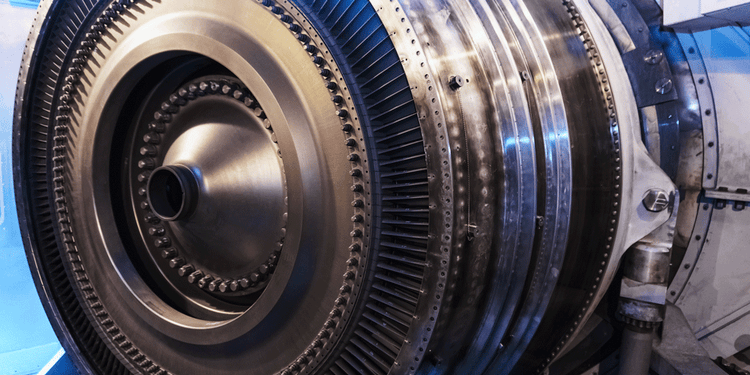
Turbine disks are critical components of aero-engines, ensuring aircraft safety by withstanding extreme operational conditions. These components are subjected to fatigue loading, due to high temperatures, immense centrifugal forces, and aerodynamic loads stresses, which significantly limit their service life. A key failure mode is rotor burst, where disks disintegrate at excessive speeds, posing catastrophic risks. To mitigate this, turbine disks are designed to resist low-cycle fatigue (LCF) failure and maintain stress levels within acceptable limits under thermal, centrifugal, and aerodynamic loads.
This study focuses on developing a minimum -weight turbine disk design while adhering to stringent safety and performance criteria. Using numerical methods in ANSYS Workbench, a parametric model with variables such as bore width, bore height, web width, and web height was developed. The optimization process ensures reduced disk weight while maintaining critical stress and burst margin thresholds. Sensitivity analyses further evaluate the impact of geometric parameters on performance guiding an efficient and safe disk design. The optimized design achieved up to 24% weight reduction without compromising safety, demonstrating a robust methodology for turbine disk optimization.